Sunday, April 17, 2011

Islamic Presentations- 8A


During this whole week, my class presented various topics about Islam. Here I will write what I learned from each fascinating topic and the presenter.


Geography of the Arabian Peninsula- Alon
I learned that Arab means nomad and it is a person from the Arabian Peninsula. If you are an Arab, that does not make you Muslim, it just makes you a native person of the land. I also learned that Yemen is the most fertile country because it close to water and it has monsoon seasons. The Arabian Peninsula has no rivers, but it is surrounded by the Red Sea, the Gulf of Aden and the Persian Gulf surround it which gives it the water it needs.


Muslim Women- Ana
From this topic, I learned that the role of women and their rights have degraded. All men and women have spiritual rights, but they are mistreated, beat and cussed at. Women are also half the price of men and almost all receive female circumcision. I also learned that they can own land, divorce and inherit land but divorce is a slow and painful process. Bibi Aisha was a victim of the new Muslims due to her getting her nose and ear cut off because she did not agree to arranged marriages and ran away.


Islamic Religion- David
I learned that Islam means submission to God and that the nomads in fact spread Islam. Also that four chapters of the Quran are read during weddings and that the people pray five times a day;  dawn, midday, afternoon, after sunset and night. Ramadan is like the Islamic Christmas and Mohammad traveled to Medina in 622.


Military Before and During Islam- Simeon
From this topic I learned that Prophet Mohammad united the tribes into not making war and that starvation and the lack of owning oasis’ was what triggered wars. Most common weapon was the jambiya, and it was a dagger for military and ceremonies. Tabar was a battle axe and the scimitars were curved swords and symbolized Islam. 635-638- was when Mohammad conquered Mesopotamia, Palestine and Syria in 3 years and the highest peak was in 750.


Prophet Muhammad- Rea
Mohammad was born in Circa 570 and was later adopted by his uncle. There he grew and later started to own a caravan business. He then met his wife who was a 40 year old widow and he was only 25. They had 6 children, two of which his sons died. On Mount Hera he saw angel Gabriel and in 622 he migrated to Medina because the people felt threatened with his new religion so they wanted to assassinate him. Finally on June 8, 632 Mohammad died when he was 63 years old in Medina, Arabia.


Islamic Religion- Sara
I learned that the followers of Mohammad wrote the Quran and they were all men. Ramadan is in the 9th month of the year and on a new moon because that is when Allah gave Mohammad the holy Quran. There are 144 chapters and Laytalul Qadar is the night when the Quran was given and all sins are forgiven. During Ramadan, no one is allowed to eat, drink, smoke or do anything that involves bringing something into your body. Only when night falls are they allowed to feast. This is good for self discipline and it makes them a patient.


Architecture- Svetlana
The houses are usually rectangular and huge so that many families can live in the house. Inside are many passages and the rich houses have separate rooms for men and women whereas poor houses only have curtains to separate rooms. The outside is dull and only one door and a few windows which is good against the wind, but inside it is heavily ornate and decorated. Also the Taj Mahal is the biggest and most famous Islamic architectural palace.          
Trade in the Islamic Empire- Annie
From this topic I learned not only that the Islamic people created the silk road and thats how they spread their empire, but they also influenced Renaissance. They questioned the world and built machines to improve life. They also grew smarter and wrote things down so that they can share it with future generations. Many cities had their own goods that they exported which lead to wealth and popularity.

Islamic Extremism


The topic which I had to present was the well-debated Islamic extremism theory. Many people are biased about this topic, so I chose to give both sides of the story and introduce what causes this kind of extremism. Many say that Islamic extremism is triggered by the jihad, religious manipulation and greed for power and money. Jihad is the effort to practice religion in the face of persecution and oppression. Many Muslims are forced or manipulated to become a Jihadist which leads to extremism and killing. Also, to become a true Muslim you have to become a jihadist. Greedy Muslims influenced Islam by using technology, opening schools and creating the Tabligns force to teach future generations the wrong things, thus creating confusion and violence. Terrorists distract the countries agenda so that they can get the attention and money they crave. They then create large groups to get even more power and use the communistic “united front” strategy when a band of extremists make a common cause with other groups to gain even more power. They use innocent people and brainwash people to do their dirty work. For my project I used PowerPoint, videos and various images to make my topic come alive and more interesting. I think that I taught my class a valuable lesson about one of the most misunderstood topics ever. I hope that they left the classroom with a new perspective and with understanding.

Thursday, March 17, 2011

Golden Age of Muslim Civilization

How did geography and trade contribute to the growth of the Muslim Empire, the spread of Islam and the achievements of the Golden Age?

The geography of the Arabian Peninsula is very harsh and hard to live on. Most of the Arabian Peninsula is covered in vast deserts, the occasional oasis and very little rainfall. But how did this empire grow to become so successful? Due to the geography being so harsh, all people became nomads. 
The traveled around in their caravans and since there is not much they could earn by moving around, they became traders or Bedouins. The deserts led people to guide traders to their desired locations. Also, many nomads became traders and traveled all over the Empire, going place to place, sharing ideas, attaining ideas, spreading their new religious beliefs and selling their objects to benefit the Empire. The geography caused the people to move around and mingle with other people which caused the Empire to grow in the sense of wealth, trade and religion. Christians on the eastern and southern coats of the Mediterranean converted to Islam and that made the empire grow. Soldiers from the Muslim Empire tried to defeat the Roman, Byzantine and Persian empires, they could not, but instead waited and when they became weaker and defeated, the Muslims would attack and conquer. The achievements of the Golden Age were all based on how successful the Muslim Empire was. Since all faiths could be practiced in the Muslim Empire, many people moved and shared their ideas which led to new ideas, people working on old ideas such as Greek and Indian. The Golden Age was a time when people started to improve on math, poetry and science. Scholars like al- Kindi said that people should not be ashamed of studying other peoples' history and with that scholars created algebra, numbers, poetry and the famous Whirling Dervishes.
 All these achievements were used to benefit the people, for example: poetry was used to teach ideas and beliefs. Hardly any of this would be possible without trade which brought money. Money paid musicians and singers which made it so popular. Yes, the geography seems to not be beneficial, but in fact it is. It gave the Muslim Empire money and patience. Without it, nothing would have been possible! 

Tuesday, March 15, 2011

Bedouin Life


It's a hot summers day
and we set out to pray,
hoping that todays day will bring us salvation.
Two traders appear, one from far and one from near,
to ask our help in finding the trade route.
We agree to help out and without any doubts, we set off to their desired location.
The camel's feet step into the glossy, yellow sand,
whilst the sun burns hard upon us.
The wind blows softly making a hushing sound,
and the view seems as if it's just a back round.
We walk slow,  but in order to go, we need to make a stop for some water.
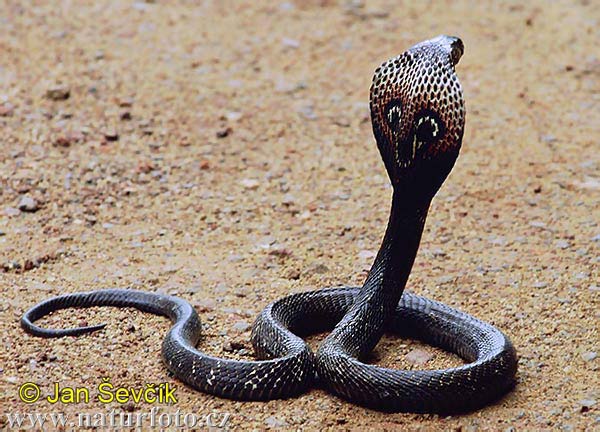
The camel falls to its knees, while we get off and step on our feet we notice a snake coming towards us.
The traders scream and shout, though we have no doubts, we are Bedouins;
we handle this situation.
We grab a spear, and without any fear, we attack the snake head on.
The snake falls quickly to our surprise and it is time for us to begone.
We walk day and night, stopping at each oasis site,
refilling our water and energy.

We pray once more as we set out for more;
hoping Allah will guide us.
The site in front of us is the town Mecca,
where each one of us must meet and heal our aura.

The traders thank us and give us a few bucks,
we have now made our pay to feed the little mouths that need food and love.
The traders open their sacks and inside are gold, expensive cloths, spice, incense and tusks.

We walk around the center, seeing people of all kinds and with husks.
The trek back to our nomadic families is long and hard,
but we know we have succeed from the start.
And so each week is based like this,
we will work for Allah and never dismiss.
He keeps us safe and keeps us going,
even when we are aging.

Thursday, February 10, 2011

End of Byzantine Empire Reflection

Imagine someone saying to you, "Learning about the Byzantine Empire isn't very important since it's long gone!" What would you tell them in order to change their mind? (include at least 2 visuals in your post)


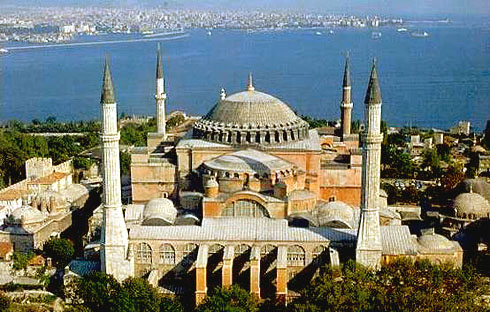
I would tell me that without learning about the past, humans can't improve the future or in this case know about our ancestors or how Christianity and the Eastern Orthodox Church came to be. We need to learn about these things so that we can be educated to know what are the differences between religions and how they came to be. For example, Constantine introduced Christianity to Constantinople and then the church broke off into two branches of Eastern Orthodox. Justinian then built the Hagia Sophia which is one of the biggest orthodox churches to have ever been built and one of the oldest to be still standing. Lets say you go for a holiday, you choose to go to Istanbul. While your sight seeing, your family member asks you what is that giant building. How would you know what it is? Aren't you curious? You can't forget important happenings in history because it shapes our future. Also, learning about the Byzantine Empire will give you a perspective on how democracy and laws were made. For example, we still use the Justinian code. We also use the Jurist's decision which is when a judge can grant a privilege to make a law on court cases. These two are called statutory laws and common laws which are still used today. If you choose to become a lawyer as your future career motive, then you must know these laws and if you were taught in school about the Byzantine Empire then you will have less struggles in learning about the laws. In addition to that you need to know how cities came to be. For example, Istanbul was a Christian city which then changed to an Eastern Orthodox city and then finally the Ottoman Turks conquered the city and named it Istanbul which it is today. Lastly, learning about the past makes you an intelligent person. You never know when you might need to talk about the Byzantine Empire, or when you are applying for college or taking an IQ test, you might need to know these things. 
Below: Hagia Sophia and a view of Istanbul

Thursday, February 3, 2011

My Mosaic

The cross that I chose is called the Slavonic Cross or the Slavic Cross. It is mostly used by Eastern Catholics and Russian Orthodox, it is also the Byzantine cross with the footrest diagonal. The slant is said to represent heaven which is the top of the cross and the bottom is for the sinners or hell. The "X" shape also symbolizes the cross which St. Andrew was crucified. The first bar on the cross is where Jesus's head was. The top of it that has three sides one to the left, right and up means the father, the son and the holy spirit. The middle bar was where the hands were nailed. The lower bar, as I mentioned, has many meanings but I think the most logical one is who is on Jesus's right side will go to heaven and those on the left will go to hell.

Wednesday, February 2, 2011

Mosaic Field Trip

Questions:
1. Describe the mosaic you have chosen to include details about figures, colours, clothing, objects etc.
2. Does the mosaic follow the "rules" according to the Metropolitan Museum of Art?
3. Is this mosaic a good example of Byzantine Art? Why/not?


Answers:
1. The mosaic I have chosen is Jesus being put on the crucifix. On the mosaic there are a lot of shadowing. For example the cloth that Jesus wearing is blue and white with some brown to make it look like it is folded. The stars are gold and the back round is light blue. To make the stars look like they are shining, there is a circle around the star which is dark blue, making it look like it shines and is a holy star. Around the crucifix is a brown boarded to make it look 3D, but the original colour is green. There are four objects which are nails in Jesus's hands and feet. They are also made to look 3D and brown with red. The red is the blood dripping. The details on this mosaic are Jesus's facial features, his upper body and knees. His hair has different shades and his torso has different shades. His knees also have different shades to show they are facing another way that shows a shadow. Below the crucifix isa pile of rocks that are different colours to show different kinds of rocks. The grass is green with different shades to indicate shadows and where the grass is.
2. This mosaic does follow the rules but lacks the floating feet. It has a frontal figure in full length, a meaningful gesture which is the famous one of Jesus being on the cross, the placement shows he is hanging on the cross, the shadows are define by outlines, the composition is balanced, the natural setting is not as important as the scene itself,  the colours are strong and brilliant along with the patterns on the cloth which are blue and white lines and the story is clear.
3. This mosaic is a good example of Byzantine Art because it depicts an important story in history. It also follows the rules of the Metropolitan Museum of Art. It is also interesting and also made up to mosaic expectations.